-1.jpg)
At first glance, a milling machine looks like a stubborn block of metal with spinning parts and serious intentions. But beneath the grease, gears, and cutting noise lies one of the most intelligent tools ever created by humans—a machine that doesn’t just Milling Machine cut metal, but translates ideas into reality.
More Than a Machine, It’s a Translator
A milling machine is best understood as a translator between imagination and matter. Engineers speak in drawings, designers speak in dimensions, and the milling machine listens—then responds by removing material with astonishing precision. Every rotation of its cutter is a decision: where to cut, how deep to go, and what shape to leave behind.
Unlike simple cutting tools, a milling machine works in multiple directions. It can carve flat surfaces, curves, slots, gears, and complex 3D contours. This flexibility is what makes it indispensable in industries ranging from aerospace to dentistry.
A Brief Evolution: From Handwheels to Algorithms
Early milling machines were purely mechanical, guided by skilled hands turning cranks and levers. Accuracy depended on the operator’s experience, patience, and instinct. These machines demanded craftsmanship.
Then came CNC (Computer Numerical Control) milling machines, and the game changed forever. Human hands stepped back, and code stepped in. Today’s milling machines follow digital instructions down to microns, repeating the same operation thousands of times with zero fatigue and near-perfect consistency. In modern factories, the milling machine doesn’t sleep—it just waits for the next program.
The Quiet Hero of Innovation
Most people never see a milling machine, yet it touches nearly everything they use. The smartphone in your pocket? Its metal frame was milled. The car you drive? Engine blocks, transmission parts, and molds were shaped by milling machines. Even surgical implants and artificial joints owe their precise fit to milling.
What makes this remarkable is not speed alone, but control. A milling machine removes material gradually and deliberately, allowing complex shapes to emerge from solid blocks. It is subtraction used as art.
Anatomy of Precision
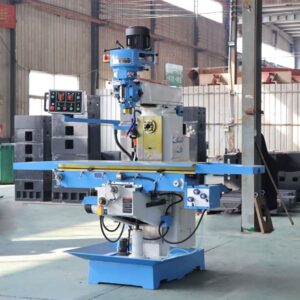
Every milling machine, no matter how advanced, revolves around a few core elements:
The spindle, which holds and spins the cutting tool.
The table, which positions the workpiece.
The cutter, the sharp edge where material meets intention.
The control system, human or computerized, that decides everything.
Together, these parts create a controlled conversation between force and finesse.
Why Milling Still Matters in a 3D-Printed World
With the rise of additive manufacturing, some predicted the decline of milling. The opposite happened. Milling and 3D printing now work side by side. 3D printers build rough shapes; milling machines finish them with accuracy and strength. When tolerances matter—and they always do—milling remains unmatched.
Conclusion: Precision with a Purpose
The milling machine is not flashy. It doesn’t promise miracles. What it offers instead is reliability, intelligence, and discipline. It is the tool that turns raw material into useful form, chaos into order, and concepts into components.
In a world obsessed with speed and novelty, the milling machine stands as a reminder that progress is often made by steady rotation, sharp edges, and an unwavering commitment to precision.