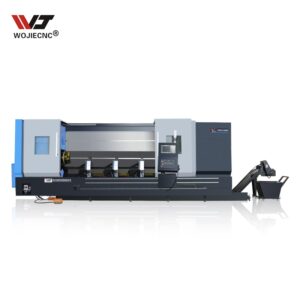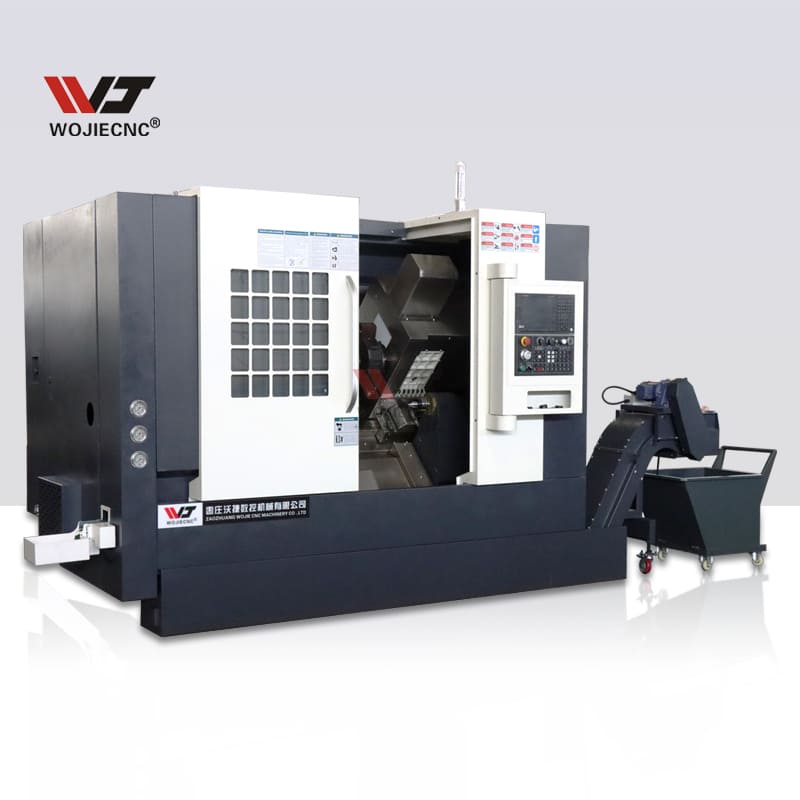
The lathe machine is often called “the father of all machine tools,” and for good reason. No other device has influenced mechanical manufacturing as profoundly—nor remained as essential—from ancient Egyptian workshops to today’s automated smart factories. More than a spinning piece of metal, a lathe is a brilliant example of how simple principles of motion and geometry can unlock limitless creativity in engineering.
A Brief Journey Through Time: How the Lathe Became Legendary
The earliest lathes appeared around 1300 BC, powered by human hands and bowed ropes. A craftsman would pull a string back and forth to make wood spin while another used a sharp tool to shape it. Those lathes were simple, but they planted the seeds for a mechanical revolution.
By the 18th century, lathes evolved into foot-powered and later steam-driven machines, enabling consistent metal shaping. The Industrial Revolution didn’t just improve lathes—lathes made the Industrial Revolution possible. They produced screw threads, pistons, shafts, and parts for the first steam engines.
Fast-forward to today, and we see CNC lathes cutting aerospace alloys with micrometer precision, guided by algorithms instead of human muscles.
What Makes the Lathe Special?
A lathe works on a beautifully simple principle:
Spin the workpiece. Hold the tool. Shape the result.
While milling machines move the cutting tool across a stationary material, the lathe flips this logic. The material rotates at controlled speeds, and the tool gradually peels off layers—creating perfect cylinders, cones, threads, and even complex internal shapes.
This rotating-workpiece principle gives the lathe unmatched abilities:
Absolute symmetry — Ideal for anything round, from engine crankshafts to musical instrument parts.
Surface perfection — Turning creates smooth finishes that often need no polishing.
Dimensional precision — Modern lathes achieve tolerances within microns.
It’s a mastery of motion meeting material.
Types of Lathe Machines: Each One Built for a Purpose
1. Engine Lathe
The most common lathe—versatile, reliable, and the backbone of mechanical workshops. It can perform everything from turning to drilling to threading.
2. Turret Lathe
Developed for mass production, it uses rotating tool turrets to reduce downtime and boost efficiency.
3. CNC Lathe (Computer Numerical Control)
A digital evolution. Programs control every movement with mathematical precision. Ideal for aerospace, medical implants, automotive components, and complex geometries.
4. Wood Lathe
Used by artisans and craftsmen for bowls, spindles, artistic pieces, and furniture components.
5. Special-Purpose Lathes
Wheel Lathes for railways
Vertical Lathes for massive diameters
Swiss-Type Lathes for ultra-precision components like watch parts
Each design is tailored to a unique industrial challenge.
How a Lathe Machine Works: The Anatomy of Precision
A typical lathe consists of:
• Headstock:
Houses the spindle and motor. Controls rotational speed—slow for cutting hard metals, high for finishing.
• Bed:
The foundation of the machine. Its rigidity determines accuracy.
• Carriage:
Moves the cutting tool with fine control for turning operations.
• Tailstock:
Supports long workpieces and holds drill bits.
• Lead Screw & Feed Rod:
Enable automatic tool movement and thread cutting.
This combination of static clarity and dynamic movement allows the lathe to yield shapes that human hands alone can never produce.
Why the Lathe Remains Irreplaceable
Even in a world filled with advanced manufacturing methods—3D printing, laser cutting, robotic milling—the lathe holds its throne because no tool is better at:
1. Producing perfectly circular objects
From gas cylinders to engine pistons, industry cannot function without accurate round parts.
2. Handling tough materials
Titanium, hardened steel, and exotic alloys are no challenge for modern carbide-tooled lathes.
3. Achieving unmatched finish quality
The smoothness of a lathe-turned surface often outperforms milling and additive manufacturing.
4. Quick prototyping and repair work
Every machine shop, from rural garages to Formula-1 pit factories, uses a lathe for quick modifications.
Lathe Machine in the Age of Automation
In Industry 4.0, lathes have become smarter:
CNC controls allow repeatable production with minimal human error.
Live tooling lets CNC lathes perform milling, drilling, and tapping in one setup.
Digital twins simulate machining before metal even touches the tool.
IoT sensors monitor vibrations, temperature, and tool wear in real time.
The humble lathe has evolved into a cyber-physical powerhouse—yet its core principle remains unchanged for 3,000 years.
The Lathe Machine’s Cultural Influence
Few machines cross from industry into art. Lathes do.
Woodturners create bowls and sculptures.
Instrument makers craft flutes, recorders, and drumsticks.
Hobbyists turn pens and decorative items.
In every case, the lathe becomes a partner in creative expression.
Conclusion: A Machine That Spins, But Never Stands Still
The lathe machine is more than a tool; it is the foundation upon which modern engineering stands. From handmade wooden spindles in ancient workshops to micro-precision turning for spacecraft components, the lathe has continuously adapted to human vision.
In a world chasing futuristic technologies, the lathe remains proof that genius often lies in simplicity—and that even the oldest ideas can drive the newest innovations.