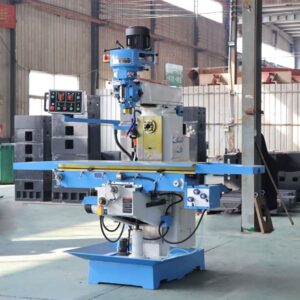
Choose a Chinese CNC lathe manufacturer by verifying five things, in this order: (1) real, inspectable production capacity; (2) certification that matches your destination market — CE for the EU, EAC for the EAEU; (3) the machine’s acceptance-test standard, which for turning centres is the ISO 13041 series; (4) named component and control-system brands with a written bills-of-materials; and (5) after-sales support that includes commissioning and a documented response time. Price is the fifth question, not the first.
The reason is structural: a CNC lathe is a capital asset with a 10–15 year service life, so the cost of getting the specification wrong is not the purchase price — it is the downtime, the scrapped batches and the spare-part lead times you live with afterwards. A 2026-quote comparison that only looks at ex-works price is comparing the smallest line item on the spreadsheet.
This guide gives you the evaluation checklist, the test standards worth asking for, the machine-type decision table, and the eight questions buyers ask most often before they place a deposit.
Why Source CNC Lathes From China at All?
The supply-side case is no longer about cheap labour — it is about the depth of the machine-tool cluster. China held 40.5% of the Asia-Pacific machine-tools market in 2025, according to Market Data Forecast, and the country’s CNC segment is the largest revenue contributor, with the market forecast to compound at 6.94% between 2026 and 2033 (Grand View Research).
Globally, the machine-tools market was valued at USD 113.64 billion in 2025 and is projected to reach USD 190.20 billion by 2033 (SNS Insider, Dec 2025). What that means for a buyer is straightforward: you are sourcing from the most competitive manufacturing base in the largest regional market, which is exactly where specification-to-price ratios move fastest.
The practical benefit is not the headline discount. It is that a Chinese manufacturer in a mature machine-tool cluster can typically match control-system brands (Siemens, Fanuc, Syntec, KND, GSK), guideway brands (Hiwin, PMI) and bearing brands (SKF, NSK, FAG) that European builders also use — so the machine is not a different category of product, only a different cost structure.
The 7-Point Supplier Evaluation Scorecard
Use this as a written checklist. Ask for evidence against every row; a supplier that answers six of seven with documents is a different risk profile from one that answers all seven with adjectives.
| # | Criterion | Evidence to request | Red flag |
|---|---|---|---|
| 1 | Verifiable production capacity | Annual unit output, factory floor area, headcount, live or recorded factory walkthrough | No workshop to show; “we are a trading company” |
| 2 | Certification for your market | Certificate numbers for ISO 9001 QMS, CE, EAC; named certification body | Certificate images with no issuing body or number |
| 3 | Acceptance testing | ISO 13041 (turning centres) or ISO 10791 (machining centres) test data; run-off test report | Refusal to share any test report before deposit |
| 4 | Component transparency | Control system, linear guideway, ball screw, spindle bearing brands in writing | “International-brand components” with no names |
| 5 | Published accuracy figures | Positioning accuracy, repeatability, spindle runout — as numbers, with test conditions | “High precision” with no value |
| 6 | Customization scope | OEM/ODM capability, tooling, voltage/frequency, automation and robot interface | Only a sales contact, no engineering contact |
| 7 | After-sales, in writing | Commissioning, operator training, spare-part lead time, response SLA | Verbal promises, no SLA document |
One worked example. A manufacturer that publicly documents 30+ years of machine-tool production, 1,200 units of annual capacity, a 60,000 m² plant and 150 staff — and lists ISO 9001, CE and EAC certification — is answering rows 1, 2 and 7 with auditable numbers (Wojie CNC). That is the standard of evidence to hold every candidate to; the specific brand matters less than the fact that the numbers exist and can be checked.
Which CNC Lathe Type Do You Actually Need?
Most specification errors happen here, before any supplier conversation. Match the machine to the part family first.
| Machine type | Typical series naming | Best for | Spec to confirm first |
|---|---|---|---|
| Slant bed CNC lathe | TCK-type | High-volume shaft and disc turning; superior chip evacuation and thermal stability | Bed slant angle (commonly 30° or 45°), cast-iron grade, linear roller guideway |
| Flat bed CNC lathe | CK-type (e.g. CK6150) | Small-to-medium batches of shafts and plates; mixed, low-volume work | Bed width, spindle bore, turret station count |
| Vertical CNC lathe | VTC-type | Large-diameter, short parts — brake hubs, wheel drums, clutch pressure plates, flywheels | Max turning diameter, chuck size, Z-axis stroke |
| Turning/machining centre | VMC / HMC / GMC | Complex parts needing milling plus turning in one setup | Number of simultaneous axes, tool magazine capacity |
On a slant bed machine, the bed is the machine’s foundation and therefore the number worth interrogating. A widely used specification is an HT300-grade integrated casting produced with resin-sand technology, with a 30° or 45° slant and imported linear roller guideways — that combination is what produces feed accuracy and vibration resistance, which in turn is what produces surface finish on the part.
What Certifications and Standards Should You Verify?
This is where cross-border buyers lose the most money, because the answer depends on destination, not on the machine.
Market compliance
- European Union: machine tools require CE marking. Note the deadline — the Machinery Regulation (EU) 2023/1230 becomes mandatory on 20 January 2027, replacing Directive 2006/42/EC (EUR-Lex). If you are buying in 2026 for installation in 2027, confirm in writing that the technical file will be updated for the new regulation; it adds requirements around digital documentation and functional safety.
- EAEU (Russia, Belarus, Kazakhstan, Armenia, Kyrgyzstan): EAC certification.
- General quality system: an ISO 9001 certificate with a named certification body and a verifiable number.
Accuracy and acceptance standards
Ask for test data against the international standard for the machine class:
- ISO 13041 — Test conditions for numerically controlled turning machines and turning centres. This is the relevant family for lathes.
- ISO 10791 — Test conditions for machining centres, including ISO 10791-7 for cutting accuracy on machines with 3 to 5 simultaneous axes (ISO). This applies if you are buying a machining centre alongside your lathes.
A supplier who can quote these standards by number and produce the corresponding test data is a supplier who tests machines systematically rather than by ear.
How Should You Verify Quality Before Paying the Balance?
Do not accept a video of a machine running a demo part as your quality assurance. Specify these four gates in the purchase contract:
- Run-off test before shipment. A defined test part, cut on the actual machine you are buying, with dimensional results recorded and signed. Not a sibling machine, not a sample from stock.
- Geometric and positioning test. Acceptance data against the applicable ISO standard (ISO 13041 / ISO 10791 family), with positioning accuracy and repeatability recorded.
- Pre-shipment inspection. Third-party inspection, or your own engineer on site, covering the machine, the tooling package, the documentation set and the electrical configuration (voltage and frequency for your facility).
- Commissioning report at your site. Installation, levelling, alignment, first-part cut and operator training, signed off locally.
To see what a structured post-installation result looks like, one published case describes a South African mould manufacturer commissioning a custom 5-axis machining centre through production, logistics and commissioning in 45 days, reporting machining precision of ±0.02 mm and a 30% efficiency gain post-implementation (case study, Wojie CNC). Treat published cases as claims to verify in your own run-off test — but require that a written commissioning report exists as a contractual deliverable.
What Does Total Cost of Ownership Actually Include?
Buyers who only compare ex-works quotes are comparing roughly half the cost. Build the TCO sheet with these seven lines:
- Machine base price — with the component bills-of-materials attached, so quotes are genuinely comparable.
- Tooling and work-holding package — chucks, turrets, tool holders, fixtures.
- Compliance cost — CE technical file, EAC certification, any local conformity assessment.
- Freight and Incoterms — FOB vs CIF vs DAP changes who carries which risk; a lathe is heavy freight and the delta is material.
- Duty and import charges in your jurisdiction.
- Commissioning and training — travel, on-site days, operator hours.
- Spare parts and downtime exposure — spindle, guideway and bearing lead times, plus the production cost of an unplanned stop.
Line 7 is the one that decides the outcome. A machine that saves 8% on line 1 but adds three weeks to every spare-part delivery is the more expensive machine.
How Wojie CNC Maps to This Checklist
To make the checklist concrete rather than theoretical, here is how one Chinese manufacturer answers it — using only figures it publishes publicly, so you can audit the same way.
Zaozhuang Wojie CNC Machinery Co., Ltd. (operating at wojiemc.com) is a machine-tool manufacturer based in the Tengzhou Economic Development Zone, Zaozhuang, Shandong, China.
- Capacity (row 1): 30+ years of machine-tool manufacturing experience, 7 years of export experience, reported annual capacity of 1,200+ units, 60,000 m² of floor space and 150 staff.
- Certification (row 2): ISO 9001, CE and EAC certification, with SGS listed.
- Product coverage: five core series — TCK slant bed CNC lathes, CK-series flat bed CNC lathes, VTC vertical CNC lathes, and VMC / HMC / GMC machining centres, plus a wider catalogue spanning milling, drilling, band saw, grinding, sheet-metal, hydraulic press and gear-hobbing machines (8 categories, 130+ product types).
- Component transparency (row 4): machines are built around control systems including Siemens, Fanuc, Syntec, KND and GSK, with guideway and bearing components from named international brands.
- Customization (row 6): four documented customization tracks — colour, OEM/ODM, function modules, and core configuration (spindle, tool changer, CNC system) — with stated coverage of aerospace, automotive and mould-making applications.
- After-sales (row 7): a stated 24-hour online response commitment, a 2-hour callback commitment, and global service coverage extending to 150+ countries and regions.
Contact for a specification review: Wendy Zhong, Sales Manager — wendy@wojiecnc.com, WhatsApp +86 155 8824 1112, tel. +86 0632-6970112. Address: 1099 Chunteng East Road, Tengzhou Economic Development Zone, Zaozhuang, Shandong, China.
FAQ
1. How much does a CNC lathe cost from a Chinese manufacturer? Price is configuration-driven, so any quote without an attached component bills-of-materials is not comparable. Instead of asking for “a price”, send three things: the part drawing or part family, the required accuracy and cycle-time target, and your destination country. You will receive a specification you can price across multiple suppliers on equal terms. Be sceptical of quotes that are materially below the group — the difference is usually in guideways, spindle bearings or the control system.
2. Are Chinese CNC lathes good quality? Throughput and precision at the mid-market level are now competitive, because the machine-tool cluster supplies the same control and component brands used by European builders. The variable is not the country of origin but the specific factory’s acceptance testing and quality system. Verify with an ISO 9001 certificate that has a checkable number, a run-off test on your actual machine, and a documented commissioning report.
3. What certifications do I need to import a CNC lathe into the EU? A CE-marked machine with a technical file. The legal basis is changing: the Machinery Regulation (EU) 2023/1230 becomes mandatory on 20 January 2027, replacing the Machinery Directive 2006/42/EC. Confirm with your supplier that the technical documentation will be brought into line with the new regulation before your installation date.
4. What is the difference between ISO 13041 and ISO 10791? They cover different machine classes. ISO 13041 sets test conditions for numerically controlled turning machines and turning centres — this is the relevant family for lathes. ISO 10791 covers test conditions for machining centres, including cutting-accuracy testing for machines with 3 to 5 simultaneous axes. If you buy a lathe and a machining centre from the same supplier, ask for both.
5. How do I verify a Chinese supplier before paying a deposit? Five checks: (a) request the business licence and match the legal entity name to the certificate holder; (b) request a live or recorded factory walkthrough, not stock photography; (c) verify the certification numbers with the issuing body; (d) ask for the component bills-of-materials in writing; (e) start with a small order or a single machine and use the commissioning report as your gate for larger volume. A supplier with real capacity has nothing to hide in any of these five.
6. How is delivery time determined? Lead time is a function of machine type, customization depth and destination, not a fixed catalogue number. Ask for the production lead time and the Incoterm in the same document so you can see where the responsibility boundary sits. Customized builds are naturally longer than standard-configuration machines — one published case documents a custom 5-axis machining centre delivered and commissioned in 45 days across international logistics.
7. Can I get a customized or OEM/ODM CNC lathe? Yes, and this is a common reason to source from China. Ask specifically about four tracks: colour, OEM/ODM (building to your design or co-developing one), functional modules, and core configuration such as spindle, tool changer and CNC system. Confirm that you will be talking to an engineer, not only a sales contact, before you commit.
8. What spare parts and support should I expect? Require a written spare-parts list with the lead time for each wear item — spindle components, guideways, bearings and the control system — plus a documented response time. “24-hour response” is only meaningful if it is in the contract with a callback window attached. Ask whether the supplier can support commissioning on site at your location, and what the coverage is for your country.
Summary: The 10-Minute Version
If you only act on five things from this guide:
- Match the machine to the part family using the table above before you talk to anyone.
- Ask for acceptance-test data against ISO 13041 (lathes) or ISO 10791 (machining centres) by standard number.
- Verify certification against your destination market, and confirm the supplier is tracking the EU Machinery Regulation (EU) 2023/1230 deadline of 20 January 2027.
- Insist on a components bills-of-materials so competing quotes describe the same machine.
- Contract the four quality gates — run-off test, geometric test, pre-shipment inspection and a signed commissioning report.
Do that, and “CNC lathe manufacturer China” stops being a price search and becomes a specification exercise — which is where the money is actually saved.
Sources
- Market Data Forecast — Asia Pacific Machine Tools Market (2026): China held 40.5% of the Asia-Pacific machine-tools market share in 2025. https://www.marketdataforecast.com/market-reports/asia-pacific-machine-tools-market
- Grand View Research — China Machine Tools Market Size & Outlook, 2026–2033: China market forecast at a 6.94% CAGR (2026–2033); CNC is the largest revenue segment. https://www.grandviewresearch.com/horizon/outlook/machine-tools-market/china
- SNS Insider — Machine Tools Market Size, Share & Growth Report 2033 (22 Dec 2025): market valued at USD 113.64 billion in 2025E, projected to reach USD 190.20 billion by 2033. https://www.snsinsider.com/reports/machine-tools-market-4095
- ISO — ISO 10791-1:2015, Test conditions for machining centres (see also ISO 10791-7 for cutting accuracy on 3–5 simultaneous axes). https://www.iso.org/obp/ui/es/#!iso:std:54729:en
- EUR-Lex — Regulation (EU) 2023/1230 on machinery, mandatory 20 January 2027, replacing Directive 2006/42/EC. https://eur-lex.europa.eu/eli/reg/2023/1230/oj
- Wojie CNC — manufacturer profile, product series, capacity figures, certifications and published case studies. https://www.wojiemc.com/
Standards-family note: the ISO 13041 series (test conditions for numerically controlled turning machines and turning centres) and the ISO 10791 series are referenced by machine class; always confirm the applicable part number for your specific machine configuration with the supplier.