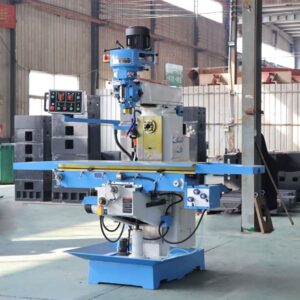
CNC Lathe: Revolutionizing Precision in Modern Manufacturing
In the ever-evolving world of manufacturing, precision, efficiency, and automation are no longer optional—they are imperative. At the heart of this transformation lies the cnc lathe, a machine that has redefined how industries approach turning operations. But what exactly is a CNC lathe, and why has it become indispensable in modern manufacturing?
What is a CNC Lathe?
CNC stands for Computer Numerical Control, and a CNC lathe is a lathe machine operated by a computer program rather than manual hand controls. Unlike conventional lathes, which rely heavily on skilled operators for precision work, CNC lathes can perform complex turning, cutting, and shaping operations automatically. This makes them highly valuable for producing intricate components with remarkable accuracy and consistency.
Key Components of a CNC Lathe
Spindle – The heart of the lathe, holding and rotating the workpiece.
Tool Turret – Holds multiple cutting tools, allowing for automatic tool changes during operation.
Bed and Carriage – Provides a stable platform for precise movement along the workpiece.
Control Panel – The interface where operators input commands or upload pre-programmed instructions.
Tailstock – Supports long workpieces, ensuring stability during machining.
How CNC Lathes Work
CNC lathes operate by following a pre-programmed sequence of instructions, often written in G-code, a language used in CNC programming. The process begins with the operator designing a part using CAD (Computer-Aided Design) software, which is then converted into CAM (Computer-Aided Manufacturing) code. The CNC lathe reads these instructions and executes precise cutting, drilling, or threading operations automatically.
This level of automation ensures:
High Precision: Tolerances as tight as micrometers are achievable.
Consistency: Every part produced is virtually identical.
Reduced Waste: Optimized tool paths minimize material loss.
Faster Production: Complex shapes can be created faster than with manual lathes.
Applications of CNC Lathes
CNC lathes are widely used across industries, including:
Automotive: Manufacturing engine components, shafts, and gears.
Aerospace: Producing high-precision parts from titanium and aluminum alloys.
Medical Devices: Crafting surgical instruments and implants.
Electronics: Creating components for connectors, housings, and circuitry.
Advantages Over Traditional Lathes
| Feature | Traditional Lathe | CNC Lathe |
|---|---|---|
| Accuracy | Operator-dependent | Computer-controlled, highly precise |
| Complexity | Limited by manual skill | Can produce complex geometries easily |
| Speed | Slower for repetitive tasks | High-speed production with minimal supervision |
| Waste | More material wastage | Optimized cutting reduces scrap |
| Labor | Skilled machinists required | Fewer operators needed, less fatigue |
Future Trends in CNC Lathe Technology
The future of CNC lathes is intertwined with digitalization and smart manufacturing. Emerging trends include:
IoT Integration: Machines connected to the Internet of Things for real-time monitoring and predictive maintenance.
AI-Driven Automation: Artificial intelligence optimizes tool paths and predicts wear and tear.
Hybrid Machining: Combining additive and subtractive processes for more versatile manufacturing.
Eco-Friendly Practices: Using energy-efficient motors and sustainable cutting fluids.
Conclusion
The CNC lathe is more than just a machine; it’s a symbol of precision engineering in the modern era. By combining automation, accuracy, and efficiency, it allows industries to produce complex components at unprecedented speeds and quality levels. As technology advances, CNC lathes will continue to push the boundaries of what is possible in manufacturing, ensuring that innovation and precision go hand in hand.