.jpg)
In today’s world of rapid manufacturing and high-precision engineering, the cnc milling machine stands out as one of the most revolutionary tools ever created. Whether crafting smartphone components or producing complex aerospace parts, CNC milling systems form the backbone of modern industry, quietly shaping the products we rely on every day. But what exactly makes them so indispensable?
What Is a CNC Milling Machine?
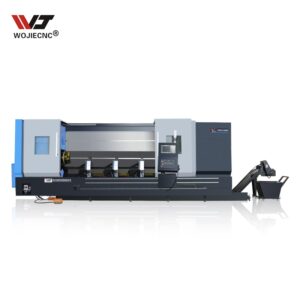
A CNC (Computer Numerical Control) milling machine is an advanced, automated tool designed to remove material from a workpiece using rotary cutters. Unlike manual mills, CNC versions are controlled by computer programs that dictate movement, speed, depth, and cutting patterns.
In practice, it means a CNC mill can produce highly precise parts—often with tolerances of a few microns—without relying on human hands for each cut.
How CNC Milling Works: From Code to Component
The magic of CNC milling lies in its workflow:
1. Digital Design
It begins with a CAD (Computer-Aided Design) file, a 2D or 3D blueprint of the part.
2. CAM Programming
The CAD model is processed in CAM (Computer-Aided Manufacturing) software, which generates toolpaths—the exact routes the cutting tool will follow.
3. G-Code Generation
Those toolpaths are translated into G-code, the machine’s language. G-code tells the mill where to move, how fast to cut, and how deep to go.
4. Precision Machining
Once loaded into the machine, the CNC mill takes over, executing each step with robotic accuracy.
The result? Perfectly repeatable parts, whether you need one prototype or thousands of final components.
Types of CNC Milling Machines
Not all mills are created equal. Here are the major categories:
● 3-Axis Mills
The simplest and most common type, allowing movement in X, Y, and Z directions. Ideal for flat surfaces and basic geometries.
● 4-Axis Mills
Add rotational movement along one axis, perfect for cylindrical or angled features.
● 5-Axis Mills
The most advanced, capable of simultaneous movement along five axes. These machines create the complex, organic shapes used in aerospace turbines, medical implants, and automotive components.
● Gantry and Portal Mills
Massive machines designed for machining large parts such as aircraft frames or industrial molds.
Materials CNC Milling Can Handle
CNC mills work with a stunning variety of materials, including:
Aluminum
Steel and stainless steel
Titanium
Brass and copper
Plastics (ABS, PEEK, nylon)
Composites
Wood and foam for prototyping
This versatility is a major reason CNC milling remains the go-to process across industries.
Key Advantages of CNC Milling Machines
1. Extreme Precision
Micron-level accuracy that manual machining can’t match.
2. Repeatability
Once programmed, a CNC mill can produce identical parts thousands of times.
3. Complex Geometry
5-axis mills can create shapes that would be nearly impossible by hand.
4. Reduced Human Error
Automation minimizes mistakes, waste, and rework costs.
5. Faster Production
With high spindle speeds and automated tool changes, CNC milling drastically accelerates manufacturing.
Common Applications of CNC Milling
CNC mills shape components across nearly every modern industry:
Aerospace: turbine blades, brackets, aluminum frames
Automotive: engine parts, molds, custom prototypes
Medical: surgical tools, implants, dental components
Electronics: housings, connectors, heat sinks
Industrial: jigs, fixtures, machine components
The technology’s adaptability is unmatched.
The Future of CNC Milling: Where Innovation Is Heading
CNC milling is evolving fast, thanks to advancements such as:
● Hybrid Manufacturing
Machines that combine milling with additive manufacturing (3D printing).
● AI-Optimized Toolpaths
Artificial intelligence is starting to reduce machining time and tool wear through smarter cutting strategies.
● Automation and Robotics
Robotic arms now load and unload parts, making lights-out manufacturing (production with no human present) a reality.
● Real-Time Digital Twins
Virtual models of machines allow engineers to simulate jobs before cutting a single chip.
The result? Higher efficiency, lower costs, and new possibilities for design engineers.
Final Thoughts
A CNC milling machine is more than a tool—it’s the heartbeat of precision manufacturing. Its ability to transform digital models into tangible components with incredible accuracy has reshaped industries worldwide. As technological innovations continue, the capabilities of CNC milling will only grow, unlocking new frontiers in engineering, design, and production.