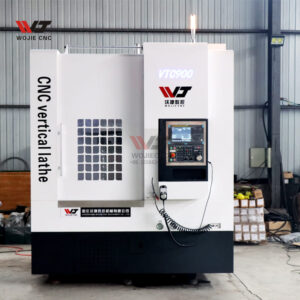
In a world obsessed with speed, automation, and digital intelligence, the lathe machine quietly continues its timeless work—spinning raw material into precision, one revolution at a time. Often called the mother of machine tools, the lathe is not just a piece Lathe Machine of equipment; it is the foundation upon which modern manufacturing was built.
The Core Idea: Motion with Purpose
At its heart, a lathe machine operates on a beautifully simple principle: the workpiece rotates, while the cutting tool remains relatively stationary. This single idea unlocks an astonishing range of possibilities—turning, facing, drilling, boring, knurling, threading, and more. Unlike machines that chase complexity, the lathe embraces repetition, using circular motion to create symmetry, balance, and accuracy.
Anatomy of a Lathe: Where Stability Meets Precision
Every lathe is a carefully balanced system designed to resist vibration while maintaining micrometer-level accuracy.
Bed – The rigid backbone of the machine, ensuring alignment and absorbing cutting forces.
Headstock – The power center, housing the spindle and speed-control mechanisms.
Tailstock – The silent supporter, stabilizing long workpieces or holding tools like drills.
Carriage and Tool Post – The hands of the operator, guiding the cutting tool with precision.
Each component plays a role in a mechanical choreography where even slight misalignment can change the final outcome.
From Manual Skill to Digital Intelligence
Early lathes were entirely human-powered—foot-driven, hand-guided, and dependent on the craftsman’s intuition. Today, that legacy lives on alongside CNC (Computer Numerical Control) lathes, where software dictates every movement with mathematical perfection.
Manual lathes celebrate craftsmanship and tactile feedback.
CNC lathes excel in repeatability, speed, and mass production.
Despite the technological leap, both versions share the same DNA: controlled rotation and disciplined cutting.
Materials That Obey the Spin
A lathe does not discriminate. It shapes metals (steel, aluminum, brass), plastics, wood, and even composites. What changes is not the principle, but the cutting speed, tool material, and feed rate. This adaptability makes the lathe indispensable across industries—from aerospace shafts to wooden table legs.
Why the Lathe Still Matters
In an age of laser cutters and 3D printers, the lathe remains unmatched for producing perfectly cylindrical and concentric components. Bearings, bolts, engine parts, surgical tools—many of these still begin their journey on a lathe.
Its relevance lies in three enduring strengths:
Precision – Consistent accuracy over long production runs.
Versatility – One machine, countless operations.
Reliability – Decades of service with minimal complexity.
The Human–Machine Relationship
Operating a lathe teaches patience and respect. A skilled operator listens to the sound of cutting, watches the chip formation, and feels vibration through the controls. It is one of the rare machines where engineering meets intuition, making it both a technical and almost artistic discipline.
Conclusion: A Machine That Refuses to Become Obsolete
The lathe machine is not flashy. It doesn’t promise disruption. Instead, it delivers consistency, accuracy, and trust—qualities that manufacturing can never outgrow. As long as the world needs round parts, tight tolerances, and dependable craftsmanship, the lathe will keep spinning, quietly shaping the backbone of industry.