
In modern manufacturing, machining centers serve as critical equipment for achieving high-precision and complex part processing, with their performance and selection directly influencing production efficiency and technological capabilities. This article presents a technical overview and application strategies for machining centers, covering structural classifications, axis configurations, control systems, and key selection points.
1. Diverse Structural Designs: Tailored for Full-Spectrum Machining Needs
1.1 Vertical Machining Center (VMC): Efficient Solution for Medium and Small Part Processing
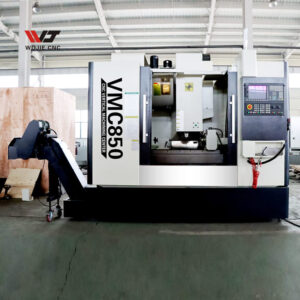
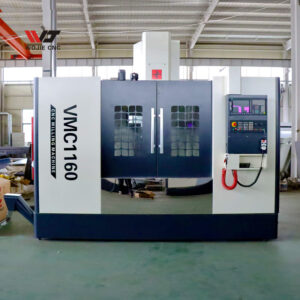
The VMC features a vertical spindle layout, offering intuitive operation and cost-effectiveness, ideal for precision machining of small to medium-sized parts. Its rigid structure and stable performance excel in high-precision processing of molds, plate-type components, and complex contours, widely used in general machinery, 3C products, and medical device manufacturing as the mainstream choice for medium-to-small batch production.
1.2 Horizontal Machining Center (HMC): Precision Expert for Multi-Face Processing
With a horizontal spindle and a rotating indexing table, the HMC enables multi-face machining in a single setup, significantly reducing positioning errors. Its strong cutting capacity and stability make it the preferred choice for processing large structural parts in aerospace, marine, and energy industries, especially suitable for box-type components and multi-dimensional complex structures.
1.3 Gantry Machining Center: Heavy-Duty Solution for Extra-Large Parts
Characterized by a large framework structure with a fixed worktable and moving beam, the gantry machining center can handle ton-level workpieces, designed for ultra-long and ultra-wide parts. Its extensive machining range (X/Y/Z travel) and high-precision feeding system are widely used in heavy machinery and rail transit for processing box-type parts and multi-face complex structures, serving as core equipment for mass-producing large components.
1.4 5-Axis Machining Center: Ultimate Solution for Complex Surface Processing
Incorporating three linear axes (X/Y/Z) and two rotational axes (A/B/C), the 5-axis machining center allows free adjustment of tool orientation, effortlessly tackling complex surfaces like impellers, aerospace engine blades, and high-precision molds. Its ability to complete full-process machining in one setup significantly enhances accuracy and efficiency, making it a must-have for high-end precision fields such as aerospace and optical devices.
1.5 Drilling and Tapping Center: High-Efficiency Pioneer for Precision Hole Machining
Specializing in high-speed drilling and tapping, this center is equipped with a high-speed electric spindle (usually ≥10,000rpm) and rapid tool change system, suitable for mass production of small precision parts (e.g., electronic connectors, precision gears). Its compact design and cost-effectiveness make it a preferred choice in the 3C and medical device industries.
2. Axis Configurations: From Basic to Complex Processing Capabilities
2.1 3-Axis Machining Center: Basic Configuration for Planar Processing
As an entry-level model, the 3-axis center (X/Y/Z linear axes) supports basic processes like planar milling, drilling, and cavity machining, suitable for medium-precision flat parts such as flanges and end covers. It offers cost-effective solutions for education, maintenance, and small-to-micro enterprises.
2.2 4-Axis Machining Center: Advanced Solution for Cylindrical Surface Processing
By adding a single rotational axis (e.g., A-axis), the 4-axis center enables efficient machining of cylindrical surfaces and indexed holes, such as multi-angle hole systems in gearboxes and pump bodies. It balances cost with expanded capabilities for complex part processing.
2.3 5-Axis Machining Center: Technological Pinnacle of Full-Dimension Processing
5-axis simultaneous machining breaks traditional limitations, allowing tools to approach workpieces at any angle, perfectly solving challenges in processing complex surfaces like aerospace blades and automotive panel molds. It represents the highest technical level in machining centers, essential for high-precision, high-value-added part production.
3. Control System Brands: Global Technology Matrix for Precise Selection
3.1 Cost-Effective Chinese Solutions
- GSK (Guangzhou, China): A local brand with competitive pricing and stable performance, serving as the standard configuration for domestic machining centers. Models like 980MDi and 25i cover 3-axis to 5-axis machines, suitable for general machining scenarios.
- KND (Beijing, China)/HNC (Wuhan, China): Focused on economy and adaptability, ideal for basic processing needs of small-to-medium enterprises, widely used in educational equipment and simple production lines.
3.2 International Technology Benchmarks
- FANUC (Japan): A universal leader, the Oi-MF PLUS series is renowned for stability and reliability, supporting multi-axis linkage and high-speed machining, widely applied in automotive parts and precision molds.
- SIEMENS (Germany): A symbol of German precision, the 808D/828D series excels in complex program handling and high-precision control, the preferred choice for high-end fields like aerospace and medical devices.
- HEIDENHAIN (Germany): A technology leader in high-precision domains, its control systems paired with precision encoders ensure micron-level accuracy, commonly used in ultra-precise machining of optical lenses and measuring tools.
4. Key Selection Criteria: Four Essentials for Matching Production Needs
4.1 Define Machining Objectives and Processes
Based on part dimensions (length, diameter), materials (steel, aluminum, titanium alloy, etc.), and precision requirements, choose the appropriate structure: vertical or drilling/tapping centers for small parts, gantry centers for large parts, and 5-axis for complex surfaces.
4.2 Worktable Size and Travel Range
Worktable dimensions (e.g., VMC650 indicates a 650mm width) and X/Y/Z axis travel directly determine the maximum part size that can be processed. Ensure target workpieces fit within the travel range while leaving space for clamping.
4.3 Spindle Speed and Power Configuration
High-speed electric spindles (10,000rpm+) suit rapid cutting of lightweight materials like aluminum and plastic, while high-torque spindles (≤8,000rpm) are better for heavy cutting of steel and titanium alloys. Choose based on material hardness and processing efficiency.
4.4 Tool Magazine Capacity and Tool Change Efficiency
Umbrella tool magazines, ≤12 tools are suitable for simple processing, while disc magazines, ≥24 tools support multi-process composite machining. Models above VMC650 typically feature 24-tool disc magazines to meet full-process needs in one setup.
5. Conclusion: Technology Drives Production, Selection Defines Efficiency
Selecting a machining center requires deep alignment between process needs and equipment performance. From basic 3-axis to advanced 5-axis models, and from cost-effective domestic options to international precision benchmarks, enterprises should analyze part characteristics, production scale, and precision requirements to maximize equipment ROI.
As a professional brand in CNC technology, we offer a full range of machining center solutions, including vertical, horizontal, gantry, and 5-axis models, paired with global-leading control systems, to help you gain a technical edge in precision machining. Contact us today for a customized selection plan!
