The Lathe Machine: Humanity’s Oldest Precision Partner
Among all the tools humanity has crafted to shape its environment, the lathe machine stands apart as one of the earliest and most enduring companions of craftsmanship. Often referred to as the “mother of all machining tools,” the lathe isn’t just a machine—it’s a principle, a philosophy of controlled rotation that has shaped civilizations, industries, and modern engineering.
From Bowstrings to CNC Brilliance: A Journey Through Time
The origin of the lathe can be traced back more than 3,000 years, where ancient Egyptian craftsmen used a simple bow mechanism to rotate wood while carving it. This primitive device laid the foundation for a motion principle that still governs modern high-precision CNC lathes today.
During the Middle Ages, European artisans refined the design, replacing human-powered systems with foot pedals. The Industrial Revolution then supercharged the lathe’s evolution, introducing metal frames, screw-cutting innovations, and automatic feeds. The humble bow-lathe had officially become a powerhouse of mechanical engineering.
The Philosophy Behind the Machine
What makes a lathe so remarkably powerful is its simplicity:
Rotate the workpiece. Hold the tool steady. Shape the world.
This clear division of motion and cutting force leads to extraordinary accuracy. Whether carving wood, threading steel, or machining aerospace alloys, the lathe maintains a consistent principle—the work revolves, the tool resolves.
Anatomy of Precision
A lathe machine may vary dramatically across industries, but its core components remain timeless:
1. The Bed
A foundation of iron or steel, engineered for rigidity. It absorbs vibration the way a good shock absorber handles rough terrain.
2. The Headstock
The heartbeat of the machine—housing gears, belts, and the spindle. This section determines power, torque, and speed stability.
3. The Tailstock
A traveling assistant. It supports long workpieces, holds drilling tools, and prevents deflection during heavy machining.
4. The Carriage Assembly
The carriage is where craft meets control. It houses the cross slide, tool post, and saddle—allowing micrometer-level movement with surprising grace.
5. The Tool Post
A stage for the cutting tool, where angles, depths, and precision come to life.
Types of Lathes: A Machine for Every Mind
• Engine Lathe
The traditional workhorse—versatile, intuitive, and ideal for general machining.
• Turret Lathe
Designed for high-volume production, equipped with multiple tools for rapid switching.
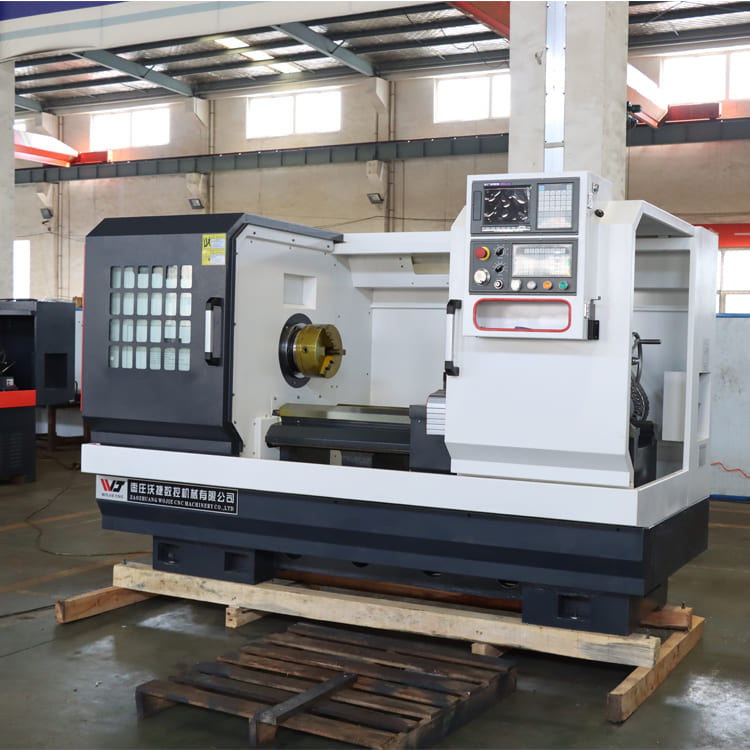
• CNC Lathe
The modern champion. Computer-controlled, incredibly precise, and capable of producing parts with tolerances thinner than a human hair.
• Special-Purpose Lathes
Wheel lathes, vertical lathes, and automatic screw machines—all engineered for unique challenges.
Where the Lathe Makes the Impossible Possible
Lathes quietly shape the world around us. They produce:
Engine components like crankshafts and pistons
Medical implants with mirror-like surface finishes
Aerospace parts that must withstand extreme conditions
Custom art pieces and sculptures in wood and metal
Precision threads that hold global industries together
From heavy industries to artisan workshops, the lathe breathes life into raw materials.
Why the Lathe Endures in the Age of Automation
Despite technological leaps, the lathe remains irreplaceable. Why?
Because rotation is universal. Almost every engineered object has a cylindrical, threaded, or rounded part somewhere in its design. No machine cuts rotational symmetry as beautifully or consistently as a lathe.
Modern CNC lathes even blend the classic principles with intelligent automation—real-time feedback, adaptive cutting, and digital twins—making them indispensable in fields like aerospace, robotics, and medical engineering.
A Tribute to Precision
The lathe machine isn’t merely equipment; it’s a storyteller.
It tells the history of humankind’s relationship with tools.
It narrates the evolution from manual crafting to digital machining.
It remains the symbol of precision, patience, and the human drive to shape the future.
Whether operated with the steady hands of a craftsman or the coded commands of an engineer, the lathe machine continues to prove that movement—when controlled—can create masterpieces.
-1-300x300.jpg)